Friday, October 10, 2014

Photos of Saints

Newly discovered 1905 photo of Ellen G. White at age 77. 
http://www.adventistreview.org/church-news/previously-unknown-photo-of-ellen-white-found
Courtesy of Jacqueline Leslie Trott-Bally via Ron Graybill


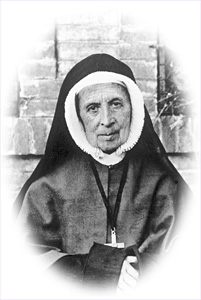
Ellen doesn't look very happy, does she? Let's look at photos of other people of God who were Ellen's contemporaries.


While some of these other people of God don't seem particularly happy, they certainly don't look upset. They have a peace about them, unlike Ellen. 
Here is the face of a saint much closer to our time. Look at the love of Jesus in her face. 


Friday, September 26, 2014

How Former Adventists Hear Current Adventists on the Sabbath Issue


Former Adventists and current Adventists talk past each other. 

I have been pondering a way to help Adventists
understand our position on why we no longer feel it is necessary to keep Saturday as the Sabbath. There are many biblical and historical reasons to no longer keep a Saturday Sabbath. But one conversation that keeps repeating itself needs to be better dealt with.

Adventist will ask us if in the New Covenant we can murder or steal or covet? If we still have to keep those, why don't we have to keep Sabbath?

That's really the wrong question to ask us for it creates more mud than clarity. Instead of a long explanation, I have come up with a different conversation in which the Adventist is confronted by a Messianic Jewish Christian. If an Adventists can understand why they no longer keep the Passover or the Day of Atonement or the Feast of the Tabernacles then they can get a glimpse of why we don't keep the Sabbath anymore.

I don't know if this will help but it's worth a try.

Let's reverse the roles a bit here so that my SDA family and friends can understand how we hear them when they try and convince us that the Sabbath is still in effect for Christians.

The following conversation takes place between an Atonement-day Christian (AC) and any Jane Doe Christian apologist (JDC). We jump in the middle of their conversation:
AC: So you don't keep the day of atonement? (AC then lists all the Old Testament passages where it records the atonement is an eternal covenant with God's people.) 

JDC: The Day of Atonement pointed forward to the cross and was fulfilled in Christ. He is our atonement.

AC: So now rape is okay? Incest is okay?…. We don't have to love the Lord with all our hearts anymore? There is no more Torah? We are just lawless in the New Covenant?

JDC: No. Absolutely not. We just have a NEW Commandment, a new law for a new Covenant.

AC: But the Bible says that God is the same yesterday and today. He doesn't change!

JDC: Right! We agree. God's plans, His goals and ends never changed and never will. All those things, like the Day of Atonement were shadows that pointed to the reality in Christ. Their purpose is finished. Now we are in the New Covenant.

AC: You are rejecting the plain reading of scripture. It says the Day of Atonement is eternal.
JDC: And it is. It is eternally fulfilled in the Cross. We no longer have a yearly day because we have He who IS the atonement living within us.  He is our atonement. 


You get the drift. All you have to do is insert the Sabbath in place of the Day of Atonement and you can see the former SDA's dilemma. We are trying to show that just because you have entered the New Covenant you are not lawless, but have new commandments and a new law! All the moral laws are still in the New Covenant. We don't steal or commit adultery or overlook incest. But when we are giving the New Covenant law, we don't go back to the Torah, but to the very words of Christ. HE tells us that we are not only to never commit adultery but never even to lust. We go, not to Moses for our law, but to Christ Himself the very source of all law. 

Jesus became our Sabbath when He said, "Come unto me all you who labor and are heavy laden and I will give you rest." 

Now our rest is spiritually fulfilled in Christ. There are many lists of sins in the New Covenant.... but nowhere is sabbath-breaking
listed as a sin after Christ's death. But adultery is, coveting is, incest is, divorce is.... Jesus gave us a New Commandment on the Mount of Blessings. That is the New Covenant. 

Friday, September 19, 2014

Let Him Be Anathema


ecently, someone pointed out to me why the Catholic Church could not possibly be the church to whom Christ gave His authority. Among the flurry of indictments against Catholicism was the 16th-century anathemas against Protestants. She attempted a loose translation of canon nine of the Justification section of the Council of Trent by saying, "If anyone believes in faith alone, let him be anathema." Surely, she questioned, I could see the problem of the Council of Trent damning her to hell and then Vatican II calling her a "separated brethren." She concluded that Catholicism is clearly contradictory and anti-biblical.

Sure, it can seem that way. After all, there have been billions of Catholics over the centuries, tens of thousands of bishops, more than a million priests that span all languages, cultures and centuries. Any group that old and diverse is going to have some dissenters who write in the name of the church. And even reading or listening to the faithful Catholics' perception of Catholic teaching can be confusing. Words are translated wrong and even change definition over time.

That brings us to her objection and the word "anathema."

It's meaning has changed over the years and that gives rise to these kinds of misunderstandings about what Catholics believe and condemn. Virulent anti-Catholics such a Jack Chick, James White, John MacArthur and R.C. Sproul teach that the 16th-century Council of Trent is damning all Protestants. Untrue.

Yet, today's dictionaries (Meriam Webster and Oxford) define "anathema" as anyone cursed, consigned to damnation by an ecclesiastical

authority. Therefore, it is quite understandable why a Protestant who sincerely believes in Sola Fide would think the Catholic Church damns them to hell.

Trent's anathemas, however, were specifically to the reformers and their heresies of that time as a warning that their souls were in jeopardy. That is very different from damning them to hell. But, alas (sigh), history is not that simple. There are anathemas that seem to damn people. So, in order to be completely clear on this, we need to to a theological and historical etymology of the word.

Anathemas in the Old Testament

The Hebrew and Greek word for anathema meant something publicly offered to God by suspending it from temple roof or walls (see Judith 16:23, 2 Macc. 9:16,). Normally, though, the word was

used to express a thing of abhorrence, similar to soldiers publicly displaying severed heads on spikes or corpses of hanged criminals dangling off their nooses (Deu. 7: 1, 2, 26; Joshua 6:17, 8:27; I Sam. 15:9-23). For Israel, an anathema meant total physical destruction. People, cities and entire nations could be put under the anathema in which no human nor animals would be spared.


Anathemas in the New Testament

St. Paul brings in a new usage of the word. Instead of death, to be anathematized meant the loss of fellowship with other Christians, but more importantly separation from Christ (Rom. 9:3, Gal. 1:8, 9, I Cor. 16: 22). With the pronunciation of an anathema, an obstinate heretic who was endangering souls by preaching another gospel was thrown from the protection of Christ's Church to the spiritual wolves. Paul also excommunicated an unrepentant member who was openly living in sin. But the heretic and wanton sinner are not irrevocably given over to Satan, but are excommunicated so that they will see the full force of their sin, repent and come back to the bosom of the church. An anathema was always for the purpose of healing and reconciliation with God, "that his spirit might be saved in the Day of the Lord Jesus Christ." It is a last ditch effort to save the soul from hell, not send him there (I Tim. 1:20; I Cor. 5:5, II Cor. 2: 6-8, 10-11).


Early Church Anathemas

The early church councils' anathemas followed the example of the Apostles by excluding heretics and grave sinners from the Eucharist (Communion table) and fellowship. The church has never had the authority to send anyone to hell, so its anathemas only reach the organized church. Only God can send anyone to hell. The church can recognize saints in heaven, but it never has, not in the history of all Catholicism ever judged anyone as in hell—not Judas, not Hitler, no one. That is not her place.


In the beginning of the fourth century at the Council of Elvira came the first known church council with official anathemas. Starting in the fifth century at the Council of Tours excommunication and anathema took on a difference of meaning, with the anathemas bringing a far worse punishment. An ominous ritual grew with the public proclaiming of an anathema. This was not drama for drama sake, but very serious rites in order to quite literally scare the hell out of the heretic.

Pope Zachary of the 8th century wrote of the ceremony that high and solemn vestments were worn by the pope who was followed by twelve priests holding candles as he sat down at the altar. He then pronounced the anathema with the words: 

"Wherefore in the name of God…in virtue of the power which has been given us of binding and loosing in Heaven and on earth, we deprive N-- himself and all his accomplices and all his abettors of the Communion of the Body and Blood of Our Lord, we separate him from the society of all Christians, we exclude him from the bosom of our Holy Mother the Church in Heaven and on earth, we declare him excommunicated and anathematized and we judge him condemned to eternal fire with Satan and his angels and all the reprobate, so long as he will not burst the fetters of the demon, do penance and satisfy the Church; we deliver him to Satan to mortify his body, that his  soul may be saved on the day of judgment." 

The priests reply "fiat" three times and then throw down the candles.

For especially egregious heretics (those who are causing schisms in the church), the pope then said, "Maranatha" meaning "the Lord comes." (I Cor. 16:22). This is an excommunication till the Lord returns. These types of anathemas are infrequent and usually reserved for Catholic leaders who obstinately choose to teach damnable heresies.

Many Protestants call Catholic apologists liars or at the least misinformed because these words prove an anathema damns someone to hell. But that is not what the proclamation says. It says that the soul will be damned if he doesn't repent and "burst the fetters of the demons… so that his soul may be saved on the day of judgement." The anathema was for the purpose of drawing the heretic back to Christ and His Church. Severe? Yes, nothing like how we handle it today, but the ritual was better than being burned at the stake or even worse, ending up in eternal fire. Anathemas were to save souls.

Upon reflection of our culture, we do the truth of the gospel little benefit today because we treat doctrine too casually and allow the heretical wolves to eat the sheep at leisure. So we have swung to the other side with a complete tolerance of heresy.


Ninth century church canons and in the Decree of Gratian (Ch. 3.5.12) as well as the Decretals included both excommunications and anathemas, separating the two in meaning. Later scholars would label these excommunication/anathemas, major and minor. According to Pope Gregory IX, the minor (excommunicati tolerati) was an exclusion of receiving the Eucharist, and the other (excommuniati vitandi) was far more severe and only given to the most stubborn of sinners; it threw them out of the Church (Church Canons 2257-2267).

Trent's Anathemas

Catholic Apologists Dave Armstrong informed his readers on his blog: 
"Further, the anathemas directed against the founders of a heresy do not apply to their subsequent followers (again, provided that they are in good faith). As time passes, and heresies become established, and people are born and raised in them, formal heresy among its members becomes less and less likely."

He continues to write that the anathemas given at Trent really do not reflect a true understanding of Luther and Calvin's theology. Luther, an old man, did not attend the council but sent representatives that, in fact, had a slightly different view of sola fide and free will.

Philip Melanchthon taught free will which most Lutherans adopted. Many Lutherans today condemn the same theology that Trent does.


The Calvinist early on began breaking into differing theological camps. This added to further misunderstandings in the Catholic Church about the nuances in differing understandings of the terms: justification, faith, will and grace.


In the last thirty years, Protestant scholars who have researched Trent have concluded that what today's Protestants mean by sola fide is not what

Trent condemned. When most Protestants define saving faith as one that works by charity, Catholics and Protestants come very close to complete agreement. The Catholic German bishops and the Lutheran Church of Germany revisited the theological differences of justification and the anathemas at Trent and concluded that the condemnations no longer applied. Also the condemnation of Catholics in the Augsburg Confession and Smalcald Articles were no longer applicable to Catholics. However, the anathemas are still applicable to Catholics.

Protestants often do not read the documents that came out of the Council of Trent. So they do not understand the Catholic position on Justification. That is really what is at the bottom of their bringing up the anathema. Let's look a three 

Justification canons:
CANON I. If any one shall say, that man may be justified before God by his own works, whether done through the strength of human nature, or through the teaching of the law, without the divine grace through Jesus Christ; let him be anathema.

CANON II. If any one shall say, that the divine grace through Jesus Christ is given only unto this, that man may more easily be able to live justly, and to merit eternal life, as if, by free will without grace, he were able [to do ] both, though hardly and with difficulty; let him be anathema.

CANON X. If any one shall say, that men are justified without the righteousness of Christ, by which He merited for us to be justified; or that it is by that [justice] itself that they are formally just; let him be anathema.
Protestant Anathemas

While Protestants avoid using the word anathema, nonetheless they have issued some severe condemnations against Catholics. Here are some from Martin Luther's Peasant's Revolt:

"The Pope and the Cardinals . . . since they are blasphemers, their tongues ought to be torn out through the back of their necks, and nailed to the gallows!" (92:94/35) 

"It were better that every bishop were murdered . . . than that one soul should be destroyed . . . what do they better deserve than a strong uprising which will sweep them from the earth? And we would smile did it happen. All who contribute body, goods . . . that the rule of the bishops may be destroyed ...." (122:377/36)

"If we punish thieves with the gallows . . . why do we not still more attack with every kind of weapon . . . these Cardinals, these Popes, and that whole abomination of the Romish Sodom . . . why do we not wash our hands in their blood?" (109:41/38)

Today's Catholic Anathemas

The church today uses the word excommunication exclusively. And there are quite a list of considerations that would keep a person from being excommunicated, such as their disposition, age, education. According to ecclesiastical law there can be no excommunication of a person who does not have the full use of their reason, moral liberty, a knowledge of what is right and wrong and an understanding of the penalty their beliefs or teachings carry.

Yet even when a Catholic is excommunicated, that cannot erase his baptism's indelible mark as a Christian. That person is still a child of God, even if in a temporary exile of the church. The Christian must not see excommunication as a punishment, but as medicine to make him or her well again. The church longs for the person to return and will continue to pray for his or her soul, even if he dies separated from the church. If the church meant excommunication as damnation, why would she pray for the excommunicated or anathematized person's soul? 


Protestant apologists, please do not misrepresent Catholic anathemas. It confuses people and divides the Body of Christ. Thank you and bless you. 


Sources:

Most of these sources are via Dave Armstrong's Blog, Catholic Answers Website, New Advent Website, Catholic Encyclopedia:

The Catholic Encyclopedia, Vol, I, V, Kevin Knight, Robert Appleton Company, 1909 and 2003 and the Catholic Encyclopedia Vol. 3, Brownson-Clairvaux

The International Standard Bible Encyclopedia Vol 1, ed. James Orr, Grand Rapids, MI: Eerdmans Pub. Co., 1956, "Anathema," 130

Theological Dictionary of the New Testament, ed. Gerhard Kittel and Gerhard Friedrich, Grand Rapids, MI: Eerdmans Pub. Co., 1985, 57

The New Bible Dictionary, ed. J.D. Douglas, Grand Rapids, MI: Eerdmans Pub. Co., 1962, "Anathema," 35

The Oxford Dictionary of the Christian Church, ed. F.L. Cross, 2nd ed. by New York: Oxford University Press, 1983, "Anathema," 50

The New International Dictionary of the Christian Church, ed. J.D. Douglas, Grand Rapids, MI: Zondervan Publishing House, 1974, "Anathema," 39

What Catholics Really Believe: Setting the Record Straight, Karl Keating, Ignatius Press, San Francisco,
1992; reprinted in 1995, #5m 17-18

The Teaching of the Catholic Church Vol 2, George D. Smith, New York: The Macmillan Co., 1960 (two years before Vatican II, 707-708

Modern Catholic Dictionary, John A. Hardon, Garden City, NY: Doubleday & Co., 1980, "Anathema," 24, and "Excommunication," 200

Fundamentals of Catholic Dogma, Ludwig Ott, Bastible, Rockford, IL: TAN Books, 1955; "Membership of the Church," 311

Evangelical and Catholics Together: Toward a Common Mission, ed. Charles Colson and Richard John Neuhaus, Dallas: Word Publishing, 1995, "The Catholic Difference," 175-227

The Question Box, Bertrand L. Conway, New York: The Paulist Press, 1929 205

Book FiveGregory IX (1227-41), tit. xxxix, ch. lix, Si quem
Ordo excommunicandi et absolved, Pope Zachary (741-52), ch. Debent duodecim sacerdotes, Cause xi, quest. iii.

The Canons and Decrees of the Council of Trent (Illustrated), Theodore Alois Buckley, Aeterna Press, 2013, (Kindle 1108-1116).

Why Do Catholics Do That? A Guide to the Teachings and Practices of the Catholic Church, Kevin Orlin Johnson, New York: Ballantine Books, 1994, 52

http://www.catholic-pages.com/dir/trent.asp


Anathema, A. Boudinhon, Trans. Douglas J. Potter, Catholic Answers website.


http://catholicbridge.com/catholic/anathemas.php